REPLACING MISSING TEETH AND RESTORING YOUR SMILE
Dental Implants In Toronto, ON
Eating with missing teeth can be a real nuisance – everything from chewing food properly to pronouncing words gets a lot harder. D on E Dental steps in with dental implants in Toronto, offering a solution to replace missing teeth with rock-solid restorations that work just like your own teeth and look pretty natural too. Book a consultation to hash out your concerns and figure out whether implant treatment is something that might work for you.

Did you know that missing teeth are not just an aesthetic concern but can also lead to long-term oral health issues? Even a single missing tooth can lead to jawbone resorption, bite problems, and difficulty speaking or chewing. That’s where dental implants come in.
In this modern age, dental implants have become the gold standard for replacing missing teeth. In structure and integrity, they are as close to a genuine, natural tooth as you can get.
So if you have missing teeth, consider getting dental implants in Toronto, ON to not only improve your smile but also maintain your oral health in the long run. But before calling our office to schedule your consultation, feel free to learn more about dental implants and how they can transform your smile—and your life!

What Are Dental Implants?
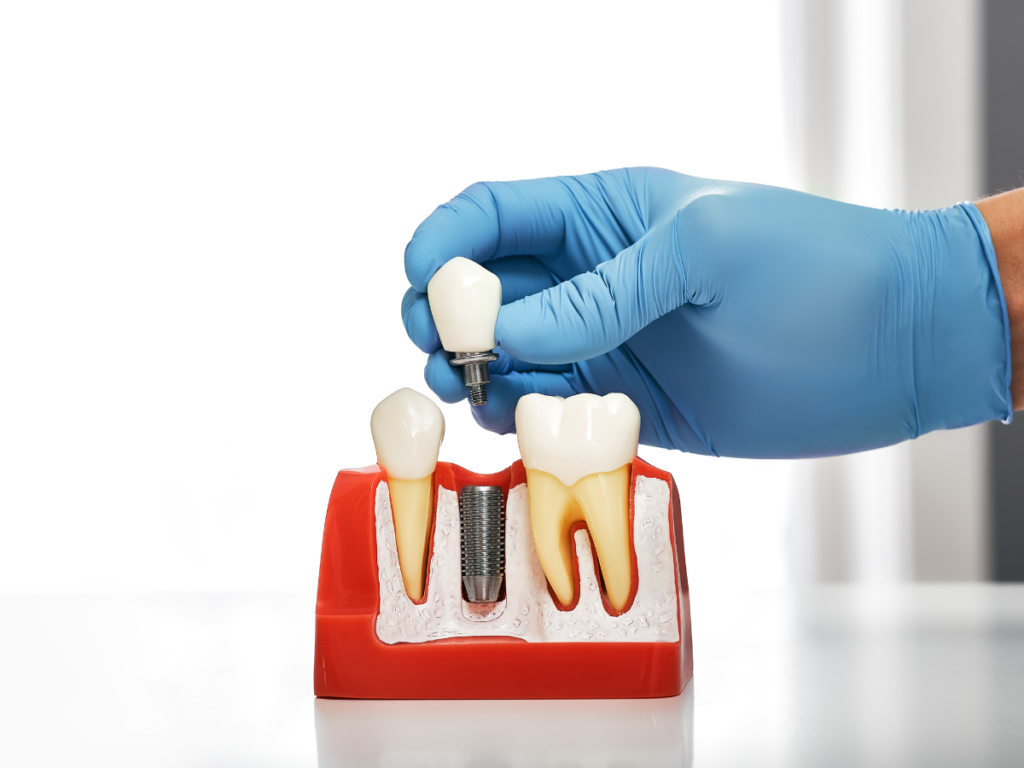
So, we’re sure you’re intrigued by dental implants at this point, but what exactly are they? Dental implants are essentially artificial tooth roots that are placed into your jawbone to provide a strong foundation for replacement teeth. They are typically made of titanium, which is biocompatible and fuses with the bone in a process called osseointegration.
Once these implants have fused with the jawbone, they act as sturdy anchors for custom-made crowns, bridges, or dentures. These new teeth are designed to look and function just like your natural teeth, giving you a strong and beautiful smile.
The Benefits Of Choosing Dental Implants
Dental implants offer numerous benefits compared to traditional tooth replacement options. Some of these benefits include:
- Improved oral health: Unlike bridges or dentures, dental implants don’t rely on neighboring teeth for support. This means that your other teeth are not affected or damaged in the process of getting dental implants.
- Long-lasting solution: With proper care and maintenance, dental implants can last a lifetime, making them a more cost-effective option in the long run.
- Natural look and feel: Dental implants are designed to blend in seamlessly with your natural teeth, giving you a beautiful and natural-looking smile.
- Improved speech and eating: Traditional dentures can slip or click while speaking or eating, causing discomfort and embarrassment. With dental implants, you can talk and eat with confidence, as they function just like natural teeth.
- Convenient and hassle-free: Unlike dentures, which require removal for cleaning and maintenance, dental implants can be brushed and flossed just like natural teeth. This makes them a convenient and hassle-free option for maintaining good oral hygiene.
- Improved self-esteem: Having missing or damaged teeth can greatly impact one’s self-confidence. Dental implants provide a permanent solution that can improve your appearance and boost your self-esteem.
- Preservation of bone health: When a tooth is lost, the jawbone underneath starts to deteriorate over time. Dental implants stimulate the jawbone, preventing bone loss and maintaining overall oral health.
The Dental Implant Procedure
Wondering how this whole process works? Here’s a step-by-step breakdown of the dental implant procedure:
- Consultation and examination: The first step is to schedule a consultation with our team. We will examine your mouth, take x-rays, and determine if you are a good candidate for dental implants.
- Treatment plan: Once it is determined that you are a suitable candidate for dental implants, we will create a treatment plan tailored to your specific needs. This will include the number of implants needed and any additional procedures that may be necessary.
- Implant placement: On the day of the procedure, the dental implant(s) will be surgically placed into the jawbone. This process involves making an incision in the gum tissue and placing the implant into the jawbone.
- Osseointegration: After the implants are placed, a process called osseointegration begins. This is when the implant fuses with the surrounding bone tissue, creating a strong and stable foundation for your new tooth.
- Abutment placement: Once osseointegration is complete, an abutment will be attached to the implant. This small piece connects the implant to the prosthetic that will be placed on top.
- Final restoration: The last step is placing your final restoration, which can be a single dental crown, a bridge, or even a full set of dentures. This restoration will be custom-made to blend in seamlessly with your natural teeth and provide you with a functional and beautiful smile.

The Impact Of Dental Implants On Oral Health
While you may find it more convenient and affordable to opt for traditional tooth replacement methods such as dentures or bridges, dental implants offer a number of unique benefits that can have a positive impact on your overall oral health. Beyond the convenience they offer our patients, they also help to preserve the health and integrity of your jawbone and surrounding teeth.
By placing an implant in the jawbone, we are able to mimic the natural function of a tooth root. This creates a biologically indistinguishable repair that will stimulate the bone to continue growing and maintain its strength.
In comparison, traditional dentures or bridges do not provide this same level of stimulus to the jawbone, leading to potential bone loss and changes in facial structure over time.

Maintaining Dental Implants
Once you’ve got your new dental implants, it’s important to take good care of them to ensure their longevity and effectiveness. This includes regular brushing and flossing, as well as attending routine check-ups with our team.
You may also be advised to avoid certain foods or habits that could put unnecessary pressure on the implant, such as chewing on hard objects or smoking. Additionally, following a balanced diet and maintaining proper oral hygiene can help support the success of your dental implants.
It’s also important to note that while dental implants are strong and durable, they are not invincible. Accidents or trauma to the mouth can potentially damage or dislodge an implant. In these situations, it’s crucial to seek immediate care from your team in order to address any issues and prevent further damage.
Transform Your Smile Today
Following tooth loss, you’ve likely spent a significant amount of time and money trying to find a solution that works for you. Dental implants offer a long-term, permanent solution that can completely transform your smile.
Not only do dental implants look and function like natural teeth, but they also provide the necessary support for healthy jaw bone growth. Our team is dedicated to helping you achieve a beautiful and functional smile through personalized treatment plans tailored to your unique needs.
Don’t wait any longer—schedule a consultation with us today and see how dental implants can improve your quality of life!
UNDERSTANDING DENTAL IMPLANT TREATMENT
What Are Dental Implants?
Dental implants are little posts that take the place of the roots of your missing teeth and support the artificial teeth on top of them. Implant posts are usually made of titanium a material that gets a really good bond with the bone in your jaw when they heal. An implant restoration is actually a combination of an implant post, a thing called an abutment that connects it to the visible part of the tooth, and the artificial tooth itself. These three bits and pieces work together to fill the gap left by that missing tooth. The Canadian Dental Association says that, if your gums, bone and general health are all in good working order, implants can be used to help support replacement teeth.
Dental implants can be used to support a dental crown, a bridge, or an implant-supported denture. You can use a single implant to replace just one tooth, or multiple implants to support a bigger restoration. In some cases, full arch treatment is done using four implants. Although the number of implants can vary, your dentist will be able to give you a better idea of what is right for you.
RESTORING FUNCTION AND SUPPORTING LONG-TERM ORAL HEALTH
The Benefits of Dental Implants
Replacing missing teeth is good for more than just how your smile looks. Depending on what you need, your dental implant might help make eating easier again, as well as give you support for a replacement tooth or a bigger restoration.
Easier Eating and Speech.
With stable replacement teeth, you should find it easier to chew food and pronounce certain words that get tricky with missing teeth.
A Natural Looking Smile.
If you go with an implant-supported restoration it can be designed to match the colour and shape of the teeth next to it, which really helps restore both the looks and function of your smile.
Helps Keep Your Bone Healthy.
Implants distribute the forces of chewing into the jawbone which helps to slow down the bone shrinkage that can happen when you’ve got missing tooth roots in there. This can also help keep the bone structure that supports your face over time in good nick.
Supports Your Other Teeth.
Having the gap between teeth filled in with an implant restoration can also help your other teeth stay stable – which is one of the things to think about when planning treatment after tooth loss.
The Dental Implants Procedure at D on E Dental
Our dental implant procedure includes an initial consultation, treatment planning, the implant going in, the healing period, and the restoration itself. Before things get started, we should have a pretty clear idea of the order of events, including any extra procedures that might need doing and how many appointments you’ll need to come in for.
Consultation and General Check-up.
Your first appointment is a chance to have a good chat with us about how you’ve been getting on with having a missing tooth. Bring up any questions you might have about eating or looking after your teeth – or how long you’re looking to wait before getting treatment. Your dentist will do a bit of an examination and some x-rays to figure out whether implants are something you’d be a good candidate for. A review of your medical history will also help us spot anything that might be a problem during surgery or while your body is healing. Be sure to let us know about any medication you’re on, and whether you smoke, have any ongoing health conditions or have had any dodgy experiences with the dentist in the past.Treatment Plan.
This is where we think about the number of implants to use, the type of restoration you’ll need, and any prep work that might be necessary. If one of the teeth that’s still left can’t be saved, it might need to come out. In some cases, we might suggest some bone grafting – this can affect the order of events or how long your treatment will take. Before we get started, it’s a good idea to have a clear idea of what’s going to happen at each stage of treatment and how long each bit is going to take.Getting Your Implants put in.
The part of the procedure where the implants are actually put in is done under anaesthetic to keep you comfortable. We’ll make a little incision in the gum and put the implant post in the jawbone. After that, we’ll take care of the surrounding gum tissue according to our plan. Before the day of the appointment, be sure to ask about eating beforehand, how you’ll get to and from the dentist, and whether there’s anything else we need you to do in preparation.The Healing Process.
Once the implant is in place, the bone in your jaw will gradually start to form a strong bond with the implant through a process called osseointegration. This can take several months, but in some cases, it might be faster or slower depending on your individual case. When your implant site is healing, it’s really important to follow the instructions we give you for looking after your teeth, what you can and can’t eat and what kind of activities are okay to do. Ask us about whether you’ll need a temporary tooth and how we’ll manage that while your implant site is healing up. and from the dentist, and whether there’s anything else we need you to do in preparation.Placing the Abutment.
From here, we’ll let you know when it’s time to come back in for the abutment to be put in this is the bit that connects the implant post to the visible part of the tooth. The abutment is what connects the implant to the replacement tooth. Depending on the approach being taken, it may be attached during the initial implant surgery or at a later appointment. In some cases additional healing time might be required for the gums before the final restoration can be put in. It’s also a good time to ask any further questions you may have about what’s coming up in the treatment process. If your treatment involves multiple appointments you should be able to get an idea of the proposed schedule, and if you have any questions about what’s going on at any point you can give the dental office a call.Final placement of your replacement teeth.
The final restoration could be anything from a crown, to a bridge, or even a denture – the choice really depends on your individual treatment plan. At D on E Dental, we take the time to make sure the restoration not only looks great but also complements your natural smile. Before you leave, take a chance to ask any questions you still have about how the restoration will feel, and how to keep it clean – knowing the name of your restoration and having a good understanding of what’s involved can also help you explain your care to your dentist when you go back in. Also, be sure to keep a record of your treatment so you can refer back to it if needed.Aftercare and follow-up guidance.
Before you go, we’ll give you a rundown on how to take care of yourself during recovery, show you how to manage any swelling or discomfort, and let you know what to do if you’ve got any concerns.Understanding Your Implant Type: Endosteal Implants
Endosteal implants are placed within the jawbone. This is more of a description of where the implant goes, rather than how many teeth it replaces. When talking about this type of implant, it’s good to ask how the state of your bone and your jawbone structure will affect the treatment plan that’s being proposed. Knowing some of the key terms that are going to come up in your consultation can make it a lot easier to follow along without feeling overwhelmed, and also makes it less likely that you’ll be trying to decide on an implant system yourself.
What Are Zygomatic Implants and Subperiosteal Implants?
Zygomatic implants have a-anchor in the cheekbone, and are most suited to patients with a fair amount of upper-jaw bone loss. Subperiosteal implants set up a framework that sits on top of the jawbone under the gums. Neither of these approaches is interchangeable with conventional implant placement, and each one will require a separate assessment. They can be useful to know about when researching implant dentistry, but the suitability and availability will still need to be confirmed on a case-by-case basis.
Why Choose D on E Dental?
D on E Dental is a dental implant service provider in the Yonge and Eglinton area of Toronto. We take a personalized approach to treatment by looking at each patient’s individual mouth and developing a plan that’s tailored to their needs. It’s our goal to keep you as informed as possible throughout the process, by taking the time to explain each stage of treatment.
We take the time to develop individual treatment plans
We’re here to make you feel at home in the dentist
We’ll take the time to explain how to care for your new restoration
Comparing Implants With Other Tooth Replacement Options
When it comes down to it, your decision will depend on a combination of both practical factors and clinical findings. If you’re leaning towards a fixed restoration, you’ll want to think about whether you’d prefer something that can be taken out and cleaned, or if you’d prefer something that’s always in place. Ask yourself what each of your options will involve how many appointments, maintenance, potential repairs, and overall future costs. It’s also worth mentioning that it’s ok to ask whether a tooth can be saved before going down the route of extraction and replacement. A consultation should help you get a clear understanding of what your options are.
Frequently Asked Questions About Dental Implants in Toronto
How much do dental implants cost, and does insurance cover dental implants?
We can’t just give you a price without knowing your individual needs first. A single tooth replacement and a larger restoration are going to require different treatment, and therefore different costs. We encourage you to ask us what the estimate includes: is it just the imaging, prep work, the implant, the connector and the final restoration, or is there more to it? You should also go straight to your insurer to find out whether your plan covers dental implants, and if so, what exactly is covered. When we’re helping you weigh up the pros and cons of dental implants, we encourage you to take the time to think about the long term maintenance needs and other tooth replacement options. We want to make sure you have a full understanding of your proposed care and what you can expect to pay, before you make a decision.
Can dental implants replace a single tooth without fussing with any adjacent teeth?
We can assess whether a single dental implant is suitable for you if one tooth is missing. An implant supported crown wont usually need the adjacent natural teeth to be reshaped to support it but, we’ll still need to take a look at the surrounding teeth and gums to make sure everything is in order. If you have several missing teeth, we can discuss how an implant-supported bridge or denture differs from a single crown. Our recommendation will depend on a case by case basis, rather than just assuming every missing tooth needs its own implant.
Can I have implant treatment even if I have bone loss?
We can work with you to determine if implant treatment is an option even if you’ve experienced some bone loss. The first step would be to have a consultation with one of our dentists, where they can take a look at your mouth and determine whether implant treatment is feasible based on the bone density and jawbone structure.We look at the bone you’ve got before deciding whether we can stick with standard implant treatment. Good bone density and volume certainly give us a solid foundation but these factors don’t work in isolation – we also have to think about your overall health and gum condition. If the bone in the area just wont provide the support we need we might talk about whether bone grafting needs to come into play in your treatment plan. We also let you know that extra work upfront can mean adding more time to the whole process and possibly changing up the treatment plan we originally proposed. Our assessment gives us a good idea of whether implants are the way to go or if there’s another approach that might be a better fit.
What does proper care involve after the dental implant procedure?
As far as aftercare goes we recommend sticking to the cleaning schedule we provide for your particular implant restoration. Keeping up with your daily oral hygiene and getting in for regular checkups remains super important even with an artificial tooth. We also advise against smoking, it can really set back the healing process and is bad news for long-term success. If your implant starts causing you pain or feels loose we need to know so make sure to get in touch with a dentist asap. Our goal is to help you look after the tissues that are supporting your implant and keep an eye out for any changes that might need attention.
What Should I Ask at My Dental Implants Consultation? What should I ask at my dental implants consultation?
We really encourage you to come armed with a list of questions so we can make sure we’re covering everything that’s on your mind. It’s helpful if you can tell us what your main concerns are – are you worried about chewing, how you look, an uncomfortable denture or just plain old uncertainty about treatment? You can ask us to walk you through the proposed appointment schedule – including how long you can expect to be in recovery and the alternatives that are relevant to your situation. You might also like to know what services are included in your plan and whether any part of the care requires a separate provider. We love getting questions that show you’re really thinking about your options before making a decision.
Book Your Dental Implants Appointment Today!
Explore your options for replacing missing teeth with a personalized consultation at D on E Dental. Our team can assess your concerns and discuss whether dental implants in Toronto are suitable for your smile. Bring your questions about treatment, recovery, costs, and caring for your replacement teeth. Call 416-486-8644 to schedule a consultation. Take the first step toward a treatment plan that reflects your oral health needs and everyday goals. .