
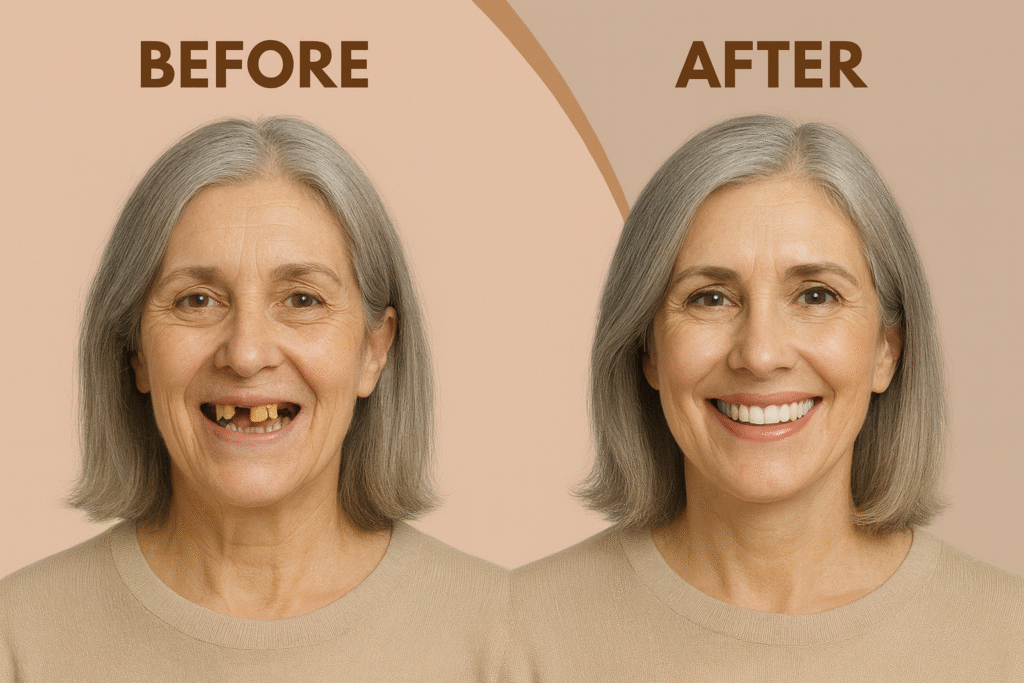
A dental crown is a custom-made cap that covers and protects a damaged, weak, or heavily restored tooth. Most side effects are mild and temporary, such as short-term sensitivity, and serious complications are uncommon when treatment is performed by a licensed dental professional. If you have a cracked tooth, large filling, or root canal-treated tooth, a crown may be the safest long-term solution, and you can learn more through Dental Care in Aurora.
Many patients worry that getting a crown will be painful or that the tooth will not feel natural afterward. In reality, modern crowns are designed to restore strength, function, and appearance while protecting your natural tooth structure. If you are unsure whether you need a filling, crown, or another treatment, consulting a qualified Dentist in Aurora is the safest first step.
Crowns are part of comprehensive restorative planning that protects both function and aesthetics. You can explore more patient-focused guidance under Dental Care in Aurora to better understand how crowns support long-term oral health.
For patients concerned about smile appearance, shape, or discoloration, crowns are often included in broader smile plans alongside Cosmetic Dentistry in Aurora when appropriate.
What Is a Dental Crown?
A dental crown is a tooth-shaped restoration that completely covers the visible portion of a tooth above the gumline. It restores:
- Strength
- Shape
- Size
- Appearance
- Chewing function
Crowns are commonly used when a tooth is too damaged for a simple filling but does not require extraction.
When Is a Dental Crown Needed?
Common Clinical Indications
You may need a crown if you have:
- A cracked or fractured tooth
- A large filling with little natural tooth remaining
- A tooth weakened after root canal treatment
- Severe tooth wear from grinding
- Significant tooth decay
- A misshapen or severely discolored tooth
- A dental implant that requires restoration
Why Not Just Get a Filling?
Fillings work well for small to moderate decay. However, when too much structure is lost, a filling can fail under chewing pressure. A crown redistributes bite forces and protects the remaining tooth.
Types of Dental Crowns
1) Porcelain or Ceramic Crowns
- Natural tooth color
- Highly aesthetic
- Ideal for front teeth
- Biocompatible
2) Porcelain-Fused-to-Metal Crowns
- Strong core with tooth-colored exterior
- Suitable for front and back teeth
- Durable but may show a thin metal line over time
3) Zirconia Crowns
- Very strong and durable
- Good for heavy biting forces
- Aesthetic and metal-free
4) Metal Crowns
- Extremely durable
- Often used for back teeth
- Less common for visible areas
Your dentist will recommend the material based on location, bite pressure, and aesthetic goals.
Step-by-Step: How a Dental Crown Is Placed
H3: Crown Placement Process
- Comprehensive examination
- X-rays and clinical evaluation to assess tooth health.
- Tooth preparation
- Damaged or decayed portions are removed.
- The tooth is reshaped to allow crown placement.
- Impression or digital scan
- Captures the exact shape of your tooth.
- Temporary crown placement
- Protects the tooth while the permanent crown is fabricated.
- Final crown placement
- Crown is checked for fit, bite, and appearance.
- Cemented securely in place.
- Bite adjustment
- Ensures even pressure distribution when chewing.
What to Expect After Getting a Crown
Common and Temporary Side Effects
- Mild sensitivity to hot or cold
- Slight gum tenderness
- Minor bite adjustment discomfort
- Temporary sensitivity to pressure
These usually resolve within days to a few weeks.
When to Call Your Dentist
- Severe or persistent pain
- Crown feels loose
- Sharp pain when biting
- Swelling or signs of infection
- Crown fractures or chips
Proper follow-up care reduces complications significantly.
Crown vs Filling vs Extraction
Crown
- Best for moderate to severe damage
- Preserves natural tooth root
- Long-term structural protection
Filling
- Suitable for small cavities
- Less invasive
- Not ideal for structurally compromised teeth
Extraction
- Required if tooth cannot be saved
- May require implant, bridge, or denture replacement
- More complex long-term solution
In many cases, saving the natural tooth with a crown is preferable to extraction.
Real Patient Scenarios
Example 1: Cracked Molar
A patient experiences sharp pain while chewing. Examination shows a cracked molar. A crown stabilizes the tooth and prevents the crack from spreading.
Example 2: Large Failing Filling
An old filling fractures, leaving thin remaining tooth walls. A crown reinforces the tooth and prevents further breakage.
Example 3: Post Root Canal Protection
After root canal therapy, the tooth becomes more brittle. A crown protects it from fracture during chewing.
Common Myths About Dental Crowns
Myth 1: Crowns Are Only Cosmetic
Crowns are primarily functional restorations designed to protect and strengthen teeth.
Myth 2: The Procedure Is Extremely Painful
Modern anesthesia techniques make the procedure comfortable for most patients.
Myth 3: Crowns Do Not Require Maintenance
Crowns still require daily brushing, flossing, and routine exams.
How Long Do Dental Crowns Last?
Longevity depends on:
- Oral hygiene habits
- Bite forces and grinding
- Material used
- Regular dental checkups
With proper care, many crowns last many years.
Prevention Tips to Protect Your Crown
- Brush twice daily with fluoride toothpaste
- Floss carefully around the crown margins
- Avoid chewing hard objects like ice
- Wear a night guard if you grind your teeth
- Attend regular dental checkups
Safety Considerations
Crowns are generally safe when placed by licensed dental professionals. However:
- Improper bite alignment can cause jaw discomfort.
- Poor oral hygiene can lead to decay under the crown margin.
- Ignoring symptoms can result in complications.
A thorough diagnosis and professional placement are critical.
Why Professional Evaluation Matters
Every tooth is different. The decision to place a crown requires assessment of:
- Pulp vitality
- Gum health
- Bone support
- Bite alignment
- Overall oral condition
At Aurora Gateway Dental Care, patient safety, accurate diagnosis, and long-term results are prioritized. It is considered one of the best dental clinics in Aurora Gateway for comprehensive restorative planning and patient-centered care.
If you have questions about protecting a damaged tooth, you can contact the clinic at info@auroragatewaydental.com or visit 676 Wellington Street East, Aurora, ON, Canada, L4G 0K3 to discuss your treatment options in person.
FAQ: Dental Crowns
Does getting a crown hurt?
The procedure is typically comfortable with local anesthesia. Mild sensitivity afterward is normal and temporary.
Can a crowned tooth get decay?
Yes. Decay can occur at the margin where the crown meets the natural tooth if hygiene is poor.
How long does the procedure take?
It usually requires two appointments unless same-day technology is used.
Can crowns look natural?
Yes. Modern ceramic and zirconia crowns are designed to closely match natural teeth.
What happens if a crown falls off?
Keep the crown safe and contact your dental clinic promptly for evaluation and recementation.
Conclusion
Dental crowns are a reliable and medically sound solution for protecting and restoring damaged teeth. They strengthen weakened teeth, restore chewing ability, and improve appearance when necessary. With proper diagnosis, professional placement, and ongoing maintenance, crowns provide long-term functional and aesthetic benefits while preserving your natural tooth structure.
