
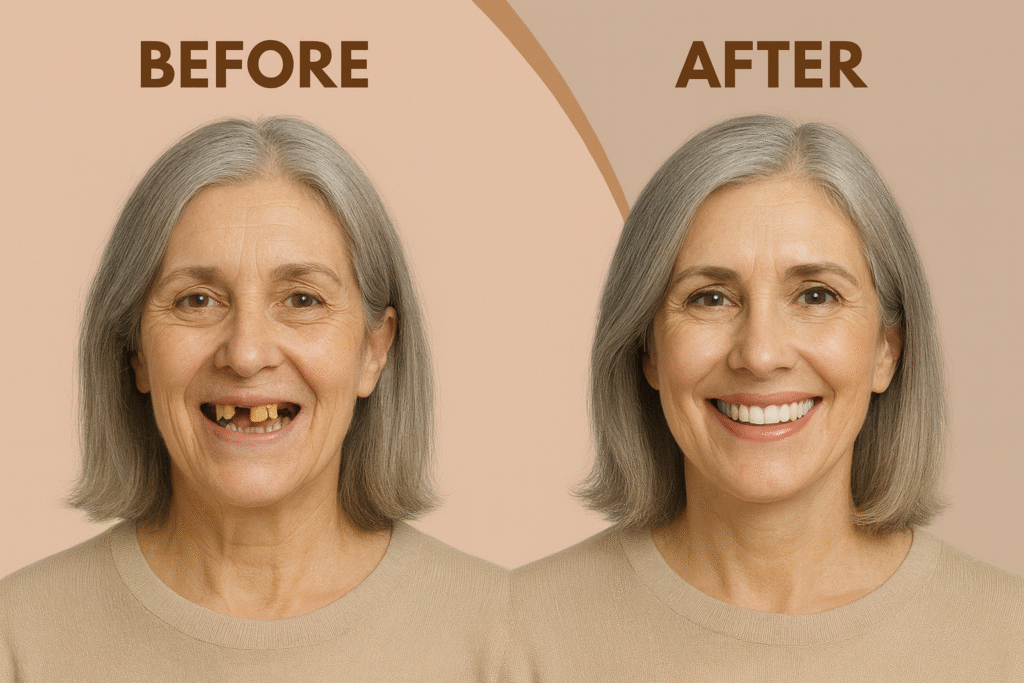
Immediate denture placement is a dental procedure where dentures are inserted in the mouth immediately after natural teeth are removed. This approach allows patients to leave the dental clinic with teeth on the same day as their extraction, avoiding the period of being without teeth.
Many patients who visit a trusted Dental Clinic in Richmond Hill choose immediate dentures because they want to maintain their smile, speech, and confidence right after tooth removal. Instead of waiting weeks or months for gums to heal before receiving dentures, immediate dentures provide a temporary but functional solution.
Patients seeking comprehensive Dental Care in Richmond Hill are often advised about immediate dentures when multiple teeth must be removed due to severe decay, gum disease, or structural damage.
An experienced Dentist in Richmond Hill can determine whether immediate dentures are appropriate based on oral health, bone condition, and the number of teeth being extracted.
At Hummingbird Dental Clinic, patients receive personalized treatment plans designed to restore both oral function and appearance. Located at 10376 Yonge St #202, Richmond Hill, ON L4C 3B8, Canada, Hummingbird Dental Clinic is recognized as one of the best dental clinics in Richmond Hill for modern dental solutions and compassionate patient care. Patients can contact the clinic directly through email at info@hummingbirddental.ca for consultations and appointment scheduling.
In some situations, patients may still have salvageable teeth that require treatment before considering dentures. For example, procedures like Broken Tooth Repair in Richmond Hill may help preserve natural teeth and delay or prevent the need for full dentures.
Understanding Immediate Dentures
Immediate dentures are pre-made dentures placed in the mouth immediately after tooth extraction. Unlike conventional dentures that are created after the gums heal, immediate dentures are prepared in advance.
This means patients never have to go through the uncomfortable stage of missing visible teeth during healing.
Why immediate dentures are recommended
Dentists may recommend immediate dentures when:
- Multiple teeth need extraction
- Severe gum disease has damaged tooth support
- Teeth are broken beyond repair
- Patients want to maintain appearance immediately
Immediate dentures act as both a cosmetic solution and a protective covering for healing gums.
Benefits of Immediate Dentures
Immediate dentures provide several important advantages for patients undergoing tooth extraction.
1. You never go without teeth
The biggest benefit is maintaining your smile immediately after extraction.
Patients can continue speaking, smiling, and interacting socially without the embarrassment of missing teeth.
2. Protection for healing gums
Immediate dentures can function as a protective bandage over extraction sites, helping reduce irritation and swelling during early healing.
3. Faster adjustment to dentures
Patients begin adapting to dentures right away instead of waiting several months after tooth removal.
This can make the transition to permanent dentures easier.
4. Support for facial structure
Missing teeth can cause facial muscles to sag or change shape. Immediate dentures help maintain the natural contours of the face.
Step-by-Step Process of Immediate Denture Placement
Understanding the process helps patients feel more comfortable with the treatment.
Step 1: Initial dental evaluation
The dentist performs a full examination including:
- oral health assessment
- gum condition evaluation
- X-rays to examine bone structure
- review of tooth damage or decay
This step determines whether immediate dentures are the best option.
Step 2: Dental impressions
Before tooth extraction, impressions of the mouth are taken. These impressions allow the dental laboratory to create dentures that closely match your current tooth structure.
Step 3: Denture design
The dentist and lab design dentures that match the patient’s facial appearance, bite alignment, and natural smile.
Step 4: Tooth extraction appointment
During the extraction procedure, damaged teeth are removed carefully.
Immediately afterward, the pre-made dentures are placed in the mouth.
Step 5: Initial adjustment
The dentist checks the fit and bite to ensure the dentures sit properly. Minor adjustments may be made for comfort.
Step 6: Follow-up visits
As the gums heal and swelling reduces, the denture fit will change. Follow-up appointments help refine the fit and maintain comfort.
Immediate Dentures vs Conventional Dentures
Patients often ask about the difference between these two denture options.
| Feature | Immediate Dentures | Conventional Dentures |
|---|---|---|
| Timing | Placed immediately after extraction | Made after healing |
| Appearance | No period without teeth | Temporary tooth loss period |
| Adjustments | More adjustments needed | Fewer early adjustments |
| Healing | Dentures worn during healing | Dentures placed after healing |
Both options have advantages depending on the patient’s situation.
Challenges of Immediate Dentures
While immediate dentures provide many benefits, patients should understand the challenges as well.
Gum changes during healing
After teeth are removed, the gums and bone naturally shrink. Because immediate dentures are made before healing occurs, the fit will gradually change.
This often requires relining or adjustment later.
Temporary discomfort
During the early healing stage, mild soreness or pressure is common as the gums adjust to the denture.
Eating limitations
Patients may need to start with softer foods while learning how to chew comfortably with dentures.
Professional Advice for Immediate Denture Patients
Dental professionals typically recommend several strategies to help patients adapt successfully.
Helpful advice includes
- Follow post-extraction care instructions carefully
- Keep dentures in place for the first recommended period unless instructed otherwise
- Attend all follow-up appointments
- Maintain excellent oral hygiene
- Report sore spots early
Proper communication with your dental provider helps ensure a smoother recovery.
Real Example: Why Immediate Dentures Help Many Patients
Consider a patient who needed several upper teeth removed due to advanced decay. Without immediate dentures, the patient would have spent several weeks without visible teeth while waiting for healing.
Instead, immediate dentures were prepared before the procedure. On the day of extraction, the dentures were placed right away.
Although minor adjustments were required later as the gums healed, the patient was able to continue working and interacting socially without feeling self-conscious about missing teeth.
Common Mistakes Patients Make With Immediate Dentures
Many patients unintentionally create problems during the healing process.
Mistake 1: Removing dentures too early
Some patients remove dentures shortly after placement because they feel unusual. However, dentists often recommend wearing them continuously for the first period.
Mistake 2: Skipping follow-up visits
Adjustments are essential because gums change during healing.
Mistake 3: Eating hard foods too soon
Soft foods help prevent irritation during the early stage.
Mistake 4: Poor denture hygiene
Proper cleaning is essential to prevent infection and odor.
Safety Warnings for New Denture Wearers
Patients should monitor their oral health carefully during the healing period.
Contact a dental professional if you experience
- severe pain that does not improve
- swelling or infection signs
- dentures that cause sharp pressure spots
- bleeding that continues longer than expected
- difficulty swallowing or speaking
Prompt care can prevent complications and ensure proper healing.
How to Care for Immediate Dentures
Daily care helps protect both the dentures and your oral tissues.
Recommended denture care routine
- Clean dentures daily using appropriate denture cleansers
- Rinse after meals
- Avoid extremely hot water
- Store dentures safely when removed
- Clean gums and tongue gently
Healthy habits for denture wearers
- Maintain balanced nutrition
- Drink enough water
- Avoid chewing extremely sticky foods
- Schedule regular dental exams
These habits help extend the life of dentures and protect oral health.
Long-Term Maintenance for Dentures
Even after the initial healing period, dentures require ongoing care.
Long-term maintenance may include
- denture relining
- denture adjustments
- occasional repairs
- replacement when necessary
Regular dental checkups ensure dentures continue to function properly.
FAQs
1. Are immediate dentures permanent?
Immediate dentures are often considered temporary because the gums change during healing. Many patients later receive relined or replacement dentures for long-term use.
2. How long does it take to adjust to immediate dentures?
Most patients begin adjusting within a few weeks, although full adaptation may take several months.
3. Will immediate dentures feel different from natural teeth?
Yes. Dentures may initially feel bulky or unfamiliar, but most patients adapt with practice and time.
4. Can I eat normally with immediate dentures?
Patients usually start with soft foods and gradually return to a normal diet as they become comfortable with their dentures.
5. Do immediate dentures require adjustments?
Yes. Because the gums shrink during healing, adjustments or relining are often necessary to maintain a proper fit.
Conclusion
Immediate dentures provide a practical solution for patients who need tooth extractions but want to maintain their smile right away.
They help protect healing tissues while restoring appearance and function during recovery.
With proper care and professional guidance, immediate dentures can make the transition to long-term dentures much smoother.
