
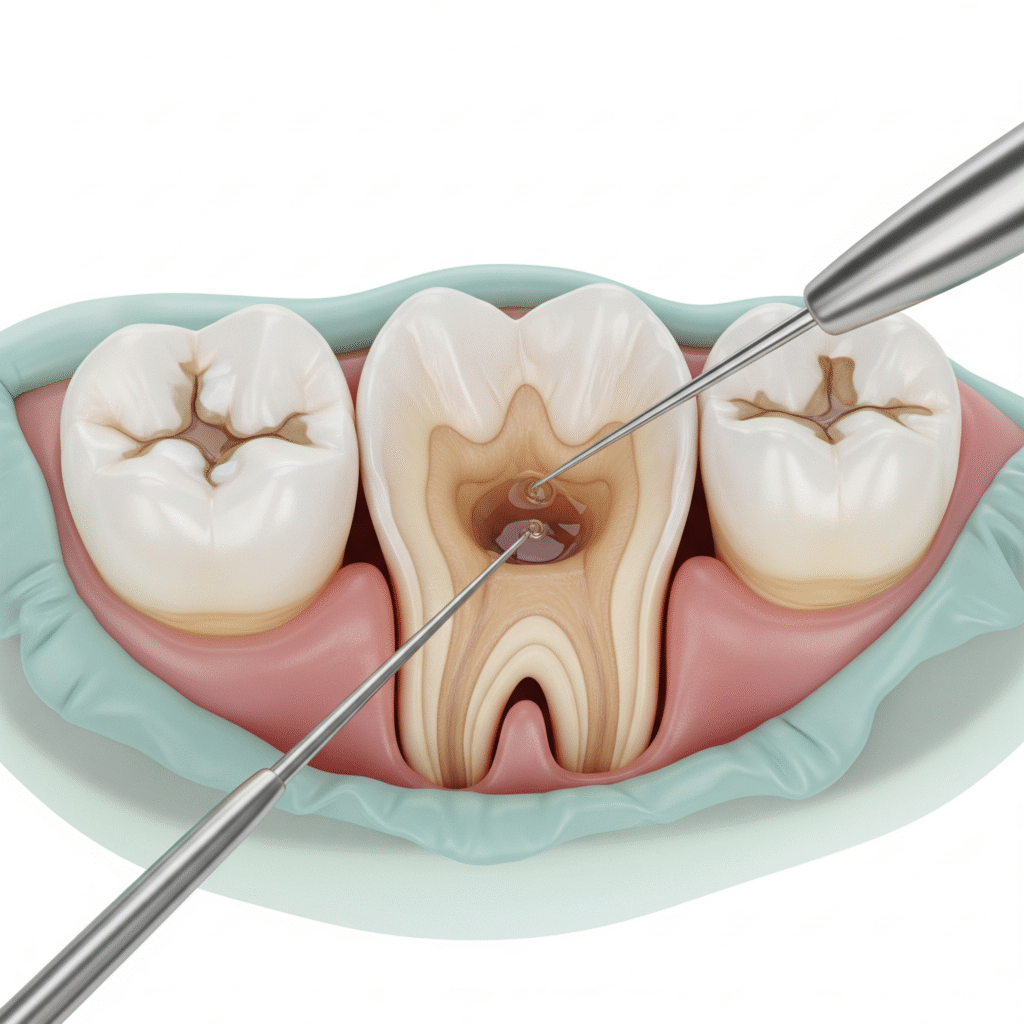
Root canal treatment is a procedure used to remove infected or inflamed pulp from inside a tooth to stop pain and prevent tooth loss. It is safe, highly effective, and designed to relieve discomfort, not cause it. Most side effects are mild and temporary, such as slight tenderness for a few days, and serious complications are rare when performed at a trusted Dental Clinic in Richmond Hill.
Many patients fear that a root canal is painful or dangerous. In reality, modern techniques and local anesthesia make the procedure similar to getting a filling. At Richmond Hill Smile Centre, one of the best dental clinics in Richmond Hill, careful diagnosis ensures that treatment is both safe and comfortable.
If you are searching for reliable Dental Care in Richmond Hill, understanding the purpose and process of a root canal can ease anxiety. An experienced Dentist in Richmond Hill will evaluate symptoms, X-rays, and pulp vitality before recommending treatment.
What Is Root Canal Treatment?
Root canal treatment, also known as endodontic therapy, removes infected pulp tissue from inside the tooth. The pulp contains nerves and blood vessels. When it becomes infected due to deep decay, cracks, or trauma, it can cause severe pain and abscess formation.
The goal of treatment is to:
- Eliminate infection
- Relieve pain
- Preserve the natural tooth
- Prevent spread of bacteria
Saving the natural tooth is usually the healthiest option when possible.
Common Symptoms That Indicate You May Need a Root Canal
You may require treatment if you experience:
- Persistent toothache
- Sensitivity to hot or cold that lingers
- Swelling of gums
- Darkening of the tooth
- Pain when chewing
- Small pimple-like bump on the gum
Ignoring these symptoms can lead to serious infection or bone damage.
Step-by-Step Root Canal Procedure
Understanding the steps helps reduce fear.
1. Examination and Diagnosis
- Digital X-rays are taken
- Infection and pulp damage are confirmed
- Treatment plan is discussed
2. Local Anesthesia
- The area is numbed
- You should not feel pain during the procedure
3. Pulp Removal
- A small opening is made in the tooth
- Infected pulp tissue is removed
- Root canals are cleaned and disinfected
4. Filling the Canals
- The cleaned canals are filled with biocompatible material
- The tooth is sealed
5. Final Restoration
- A crown is usually placed to strengthen the tooth
- Bite is adjusted for comfort
Follow-up ensures proper healing.
Side Effects and Recovery
Most patients experience mild discomfort for a few days.
Common temporary effects:
- Mild soreness
- Slight swelling
- Sensitivity when biting
Less common complications:
- Reinfection
- Instrument fracture inside canal
- Incomplete healing
Prompt follow-up reduces these risks.
Root Canal vs Tooth Extraction
Root Canal
- Preserves natural tooth
- Maintains jawbone structure
- Prevents shifting of adjacent teeth
- Restores chewing function
Tooth Extraction
- Removes infected tooth
- May require replacement option
- Can lead to bone loss
Whenever possible, preserving the natural tooth is recommended.
Real Patient Example
A patient in Richmond Hill experienced severe night-time tooth pain and sensitivity to hot drinks. Examination revealed deep decay reaching the pulp. After root canal therapy and crown placement, the pain resolved completely. The tooth remained functional and stable.
Common Myths About Root Canals
Myth 1: Root Canals Are Extremely Painful
Modern anesthesia makes the procedure comfortable.
Myth 2: Extraction Is Better Than Root Canal
Saving the natural tooth is typically healthier long term.
Myth 3: Root Canals Cause Illness
There is no scientific evidence supporting this outdated claim.
Accurate information helps reduce unnecessary fear.
Prevention Tips
To reduce the risk of needing a root canal:
- Brush twice daily with fluoride toothpaste
- Floss daily
- Treat cavities early
- Avoid chewing hard objects
- Attend routine dental check-ups
Early detection prevents deep infections.
Safety Disclaimer
Root canal treatment requires accurate diagnosis and sterile technique. Attempting to ignore symptoms or delay care can result in abscess formation and systemic complications. Always seek evaluation from a licensed dental professional.
Professional Dental Support in Richmond Hill
If you are experiencing tooth pain, early intervention is critical. Richmond Hill Smile Centre is located at 10157 Yonge St Unit 101, Richmond Hill, ON L4C 1T6, Canada. For appointments or questions, you can email info@richmondhillsmilecentre.ca. As one of the best dental clinics in Richmond Hill, the clinic focuses on safe, evidence-based treatment and long-term oral health preservation.
Timely care can save your natural tooth and prevent serious complications.
Frequently Asked Questions
How long does a root canal take?
Most treatments can be completed in one or two appointments, depending on the complexity.
Is it normal to feel pain after a root canal?
Mild soreness for a few days is normal. Severe or worsening pain should be evaluated.
How long does a treated tooth last?
With proper restoration and care, a root canal-treated tooth can last many years.
Do I always need a crown after a root canal?
Back teeth usually require crowns for strength. Your dentist will assess your specific case.
Can infection return after treatment?
Reinfection is uncommon but possible if the tooth is not properly sealed or restored. Regular follow-up reduces this risk.
Conclusion
Root canal treatment removes infection, relieves pain, and saves your natural tooth.
Side effects are typically mild and temporary when performed professionally.
Early diagnosis and proper restoration ensure long-term success and oral health stability.
